🐾 Senior Dog Health
June 2026
·
10 min read
Is Your Senior Dog Having Trouble Getting Up? Read This Before You Worry
✅ Information in this article references guidance from: American Kennel Club (AKC.org), PetMD.com, and VCA Animal Hospitals. Always consult a licensed veterinarian if your senior dog is struggling to rise or experiencing sudden mobility loss.
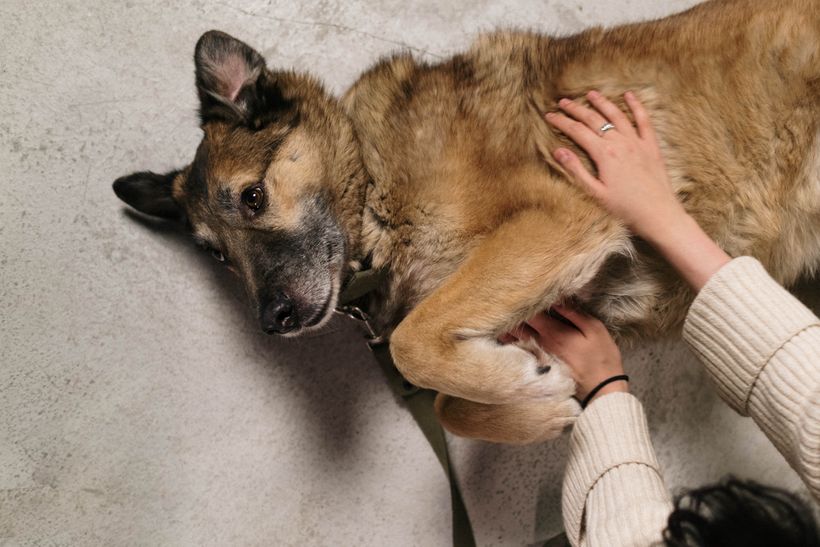
When a senior dog struggles to rise, most owners feel a mixture of helplessness and fear. In the majority of cases, there is an identifiable cause — and a meaningful treatment plan. (Photo: cottonbro studio / Pexels)
Quick Answer: When a senior dog can't get up, the most common cause is osteoarthritis — joint inflammation that causes stiffness after rest. Other causes include muscle weakness (sarcopenia), hip dysplasia, degenerative myelopathy, and intervertebral disc disease (IVDD). The AKC notes that most mobility issues in senior dogs are manageable with veterinary care, environmental changes, pain management, and physical therapy. Sudden inability to stand — especially with loss of bladder or bowel control — is a veterinary emergency requiring immediate care.
You call your dog for breakfast and watch them struggle. They shift, try to push up, collapse back down. On the second or third attempt, they make it — but it takes effort you've never seen from them before. Your stomach drops.
Watching a senior dog struggle to get up is one of the harder moments in a dog owner's life. It's a visible sign that your dog's body is changing, and the helplessness of not knowing why — or what to do — can feel overwhelming.
The good news is that difficulty getting up is one of the most well-understood symptoms in senior dog health. In most cases, there is an identifiable cause, a treatment approach, and meaningful changes you can make today to ease the struggle.
Gradual vs. Sudden: Why the Onset Matters
Before exploring causes, the most important question is: did this develop gradually over weeks or months, or did it happen suddenly — overnight or over a few hours?
🐢 Gradual onset
Stiffness builds slowly over weeks or months. Dog has good days and bad days. Typically improves once moving. Most likely causes: arthritis, muscle weakness, hip dysplasia.
⚡ Sudden onset
Dog was mobile yesterday, cannot stand today. May cry out in pain, drag hind legs, or lose bladder control. May indicate IVDD or a spinal emergency — contact a vet immediately.
The AKC notes that sudden loss of mobility — particularly in the hind legs — warrants emergency veterinary evaluation, as some spinal conditions may progress to permanent paralysis if not treated promptly. Gradual decline, while still requiring veterinary attention, typically allows more time to evaluate and plan.
5 Common Reasons Senior Dogs Struggle to Get Up
📝 The following scenarios are for illustrative purposes only and represent common patterns described in veterinary practice. They do not refer to specific individuals.
Osteoarthritis — the gradual breakdown of cartilage inside joints — is by far the most common reason senior dogs struggle to rise. The AKC notes that the pattern is distinctive: stiffness is worst right after rest, the dog may need multiple attempts to stand, and movement typically improves after a few minutes of walking as synovial fluid redistributes through the joint.
Large breed dogs (Labs, German Shepherds, Golden Retrievers) are especially vulnerable, but any dog over age 7 may begin showing signs. The hip, elbow, and knee joints are most commonly affected. In many dogs, arthritis develops silently for months before an owner notices the difficulty rising.
📖 A pattern vets commonly see
A large-breed dog — often 9 or 10 years old — begins needing two or three attempts to rise from a hard floor each morning. Once up and moving for five minutes, the owner reports the dog seems fine and even eager to walk. This classic "start-up stiffness" pattern is highly characteristic of osteoarthritis and typically responds well to a combination of pain management, joint supplements, and environmental modifications such as orthopedic bedding and non-slip floor surfaces.
What helps: Veterinary-prescribed NSAIDs (available only through a licensed veterinarian), joint supplements (glucosamine, omega-3 fatty acids), orthopedic bed, non-slip rugs, shorter but more frequent walks, and maintaining a healthy weight. The AKC identifies weight management as one of the most effective single interventions for arthritic dogs.
As dogs age, they naturally lose muscle mass — a process called sarcopenia. Reduced muscle strength in the hindquarters makes it harder to push up from a lying position. This problem is often compounded in dogs who have become less active due to another condition, such as arthritis — less movement means faster muscle loss, creating a worsening cycle.
You may notice your dog's hindquarters appearing thinner or less defined than before. The dog may rock or wobble when trying to rise, or may need to find a wall or elevated surface to push against. Rising from hard, flat floors tends to be the most difficult.
📖 A pattern vets commonly see
A formerly active senior dog gradually struggles more and more with rising, particularly on slippery floors. The veterinarian notes significant muscle loss in the rear legs — a common pattern in dogs who have reduced their activity level over months or years. Supervised gentle exercise and targeted physical rehabilitation are frequently recommended to help slow this cycle and rebuild functional strength.
What helps: Gentle, consistent exercise — short leash walks and supervised swimming; physical therapy with a certified canine rehabilitation therapist; adequate dietary protein (consult your vet before changing food); non-slip surfaces to improve confidence and reduce falls. Ask your vet about a referral to a canine rehab specialist.
Hip dysplasia — an abnormal formation of the hip socket — often becomes more symptomatic as dogs age. While the structural problem is present from early life in many dogs, the wear on a malformed joint accelerates over time, and secondary arthritis develops. VCA Animal Hospitals notes that large and giant breeds (Great Danes, Saint Bernards, Labs, German Shepherds) have the highest prevalence.
Dogs with hip dysplasia may show a characteristic "bunny hop" gait, may be reluctant to use stairs, and may flinch when touched around the hip area. Rising from a lying position often involves swinging the hind end to one side before pushing up — a movement pattern that's quite distinctive once you know to look for it.
📖 A pattern vets commonly see
An owner of a large-breed dog notices their dog has been rising with a swinging, sideways motion for several months. X-rays reveal significant hip dysplasia with secondary arthritis — a very common finding in older large-breed dogs. This pattern typically responds well to a combination of pain management, weight reduction, and physical therapy. In some candidates, surgical options may be discussed with a veterinary specialist.
What helps: Veterinary-prescribed pain management, weight maintenance, ramps to avoid jumping, orthopedic bedding, and physical therapy. Surgical options such as total hip replacement may be available through a licensed veterinarian for appropriate candidates.
Degenerative myelopathy is a progressive neurological disease affecting the spinal cord, most commonly seen in German Shepherds, Boxers, Pembroke Welsh Corgis, and Chesapeake Bay Retrievers. VCA Animal Hospitals describes DM as a slow-onset, non-painful destruction of the nerve conduction pathways in the spinal cord, typically beginning with hind leg weakness that makes it harder to rise.
Early signs include difficulty getting up, a tendency to knuckle the rear paws when walking (stepping on the top of the foot rather than the pads), and progressive wobbliness in the hindquarters. Unlike arthritis, DM does not cause pain — but it does cause progressive weakness that may advance to full hind limb paralysis over months to years.
📖 A pattern vets commonly see
A large-breed senior dog begins showing gradual rear leg weakness with no obvious pain response when the spine is touched. The owner notices occasional knuckling of the rear paws and increasing difficulty rising. Neurological testing confirms degenerative myelopathy. VCA notes that while there is currently no cure for DM, intensive physical rehabilitation — including underwater treadmill therapy and targeted exercises — has been shown to significantly slow progression and extend quality of life compared to dogs who receive no physical therapy.
What helps: While there is no cure for DM, physical rehabilitation, mobility aids (support harnesses, wheeled carts for advanced stages), and attentive home care can meaningfully extend quality of life. Ask your vet for a referral to a certified canine rehabilitation therapist early in the course of the disease.
Intervertebral disc disease occurs when the discs between the vertebrae of the spine degenerate or herniate, compressing the spinal cord. PetMD notes that while IVDD is most familiar in Dachshunds and other long-backed breeds, it may affect any dog as the spinal discs age and weaken over time — including otherwise healthy senior dogs of any breed.
IVDD may cause sudden-onset inability to stand, particularly in the hind legs. The dog may cry out in pain, drag the hind legs, or lose control of the bladder or bowels. Unlike the gradual deterioration of arthritis or degenerative myelopathy, IVDD can progress from "slightly off" to "can't stand" within a matter of hours.
📖 A pattern vets commonly see
A dog is active in the morning and by evening cannot rise from a lying position and cries out when touched along the spine. This sudden onset is a hallmark of acute IVDD and constitutes a veterinary emergency. PetMD notes that disc injuries cannot reliably be seen on standard X-rays — MRI or CT imaging is typically required for diagnosis. Time-sensitive treatment — which may include surgery available only through a licensed veterinarian — can make the difference between recovery and permanent paralysis.
⚠️ Important: IVDD with sudden-onset hind leg weakness or paralysis is a veterinary emergency. Do not wait to see if the dog improves — contact your vet or an emergency animal hospital immediately. Surgical options, when indicated, are most effective when performed within 24–48 hours of onset.
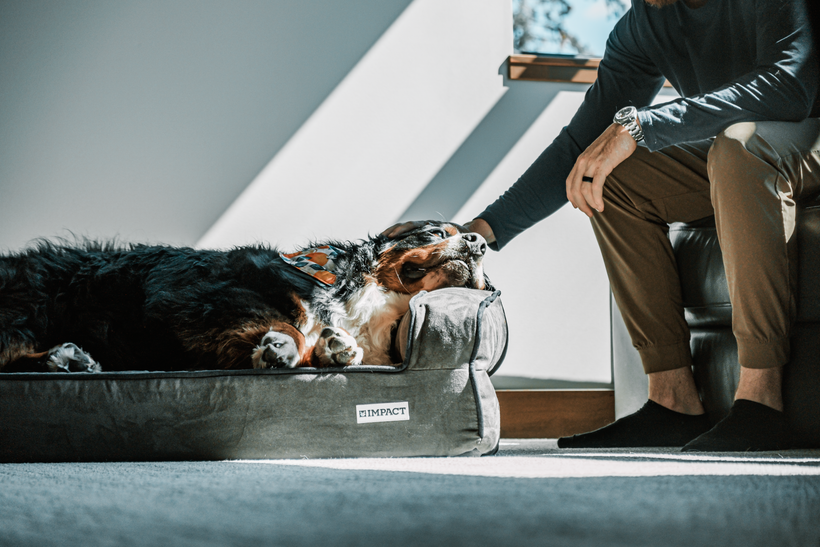
An orthopedic dog bed with supportive foam is one of the most impactful home changes for senior dogs with mobility challenges — reducing joint pressure and making it easier to rise. (Photo: Impact Dog Crates / Pexels)
🚨 Go to the Vet Right Now If Your Dog:
- Suddenly cannot stand or walk after being normally mobile
- Is dragging the hind legs or knuckling the paws without correction
- Has lost control of the bladder or bowels
- Cries out in pain when touched along the spine or when attempting to move
- Has collapsed and cannot get up at all
- Shows rapid breathing, pale gums, or obvious extreme distress alongside inability to rise
- Has become disoriented, confused, or unresponsive
Home Changes That Help Tonight
While a veterinary evaluation is always the right first step, there are several changes you can make immediately to reduce the effort and discomfort of rising for your senior dog. These changes are appropriate regardless of the underlying cause.
- ✅Add non-slip rugs or yoga mats along your dog's common pathways and sleeping areas. Slippery floors make rising significantly harder and more painful — improved traction is consistently one of the highest-impact changes you can make for a senior dog with mobility challenges.
- ✅Switch to an orthopedic dog bed with dense memory foam. Raised sides make it easier for dogs to push up with their front legs. Hard floors with no support increase joint pressure and make rising more effortful for arthritic and weakened dogs.
- ✅Use a rear-support harness or sling under the hindquarters to gently assist your dog when rising. Several commercially available products allow you to help lift without straining your own back or your dog's joints.
- ✅Remove obstacles between resting area and food/water. Fewer steps and turns mean less effort. Place food and water bowls at a height that avoids sharp neck bending, which can stress arthritic cervical vertebrae.
- ✅Add ramps to elevated surfaces — sofas, car seats, or beds your dog uses. Avoid allowing your dog to jump down from heights, which can jar arthritic or weakened joints far more than jumping up does.
- ✅Keep nails trimmed short. Overgrown nails shift paw angle and reduce traction, making it harder for dogs with weakness to find purchase on the floor when pushing up to stand.
- ✅Assist your dog to rise gently using a towel under the belly or a hindquarter harness — not by grabbing legs or the collar, which can cause pain or injury in dogs with joint or spinal problems.
What Your Vet Will Do
A thorough veterinary examination is essential to identify the underlying cause of your dog's difficulty getting up. Knowing the cause allows for targeted treatment — and targeted treatment consistently produces better outcomes than generalized guessing.
What to expect at the appointment
Your vet will likely perform a physical and neurological examination, assessing joint range of motion, pain response, muscle tone, and gait. They may recommend X-rays to evaluate joint degeneration or visible spinal changes. For suspected degenerative myelopathy or IVDD, more advanced imaging — MRI or CT scan — may be required, typically at a specialist referral center.
Treatment options your vet may discuss
Depending on the diagnosis, treatment may include veterinary-prescribed NSAIDs for pain and inflammation management; gabapentin or other medications for nerve-related discomfort (available only through a licensed veterinarian); injectable joint support such as Adequan (available only through a licensed veterinarian); physical rehabilitation therapy with a certified canine therapist; acupuncture; cold laser therapy; or nutritional adjustments. Your vet will help build a management plan suited to your dog's specific diagnosis, age, and overall health.
Regular veterinary check-ins — at least every six months for senior dogs with mobility issues — allow your vet to adjust the treatment plan as your dog's condition evolves. Pain management, in particular, may need refinement over time to maintain your dog's comfort and quality of life.
Frequently Asked Questions
Q: My senior dog struggles to get up in the morning but seems fine after a few minutes. Should I be worried?
This "start-up stiffness" pattern — difficulty rising after rest that improves with movement — is a classic sign of osteoarthritis. While the dog may appear to recover quickly, this pattern indicates joint inflammation that warrants a veterinary evaluation. Early pain management, joint supplements, and environmental changes can significantly slow progression and improve quality of life.
Q: My dog can't get up and cries out when I touch their back. What should I do?
Pain along the spine combined with difficulty or inability to stand is a potential sign of intervertebral disc disease (IVDD) or another spinal emergency. This combination warrants immediate veterinary attention — not watchful waiting. Keep your dog as still as possible, minimize movement, and get to a vet or emergency animal hospital right away. Limit carrying your dog in a way that allows the spine to flex or bend.
Q: Can a senior dog with mobility problems still have a good quality of life?
Yes — in most cases, meaningfully so. The AKC notes that many dogs with arthritis, hip dysplasia, and even early degenerative myelopathy can maintain an excellent quality of life with proper management. Pain control, physical therapy, mobility aids, and home modifications collectively make a significant difference. Quality of life should be assessed regularly with your veterinarian, who can help you recognize when comfort remains achievable and when it may be declining.
Q: Is it normal for an older dog to have more trouble getting up on cold mornings?
Cold temperatures can worsen joint stiffness in dogs with arthritis, just as in people. This is not considered a normal part of aging — it indicates that the joints are already inflamed enough to be significantly affected by temperature. Keeping your dog warm (a cozy orthopedic bed away from drafts, a dog sweater for outdoor trips) may help in the short term. But a vet visit to assess and address the underlying joint condition is recommended rather than simply managing around the cold.
Q: How can I help my senior dog get up without hurting them?
Use a rear-support sling or a rolled towel placed under the belly to gently assist your dog into a standing position. Avoid pulling by the collar or lifting by the legs, which can stress the spine and joints. Ensure the floor has good traction before asking your dog to rise. If your dog is consistently painful when rising, speak with your vet — getting them comfortable enough to rise more easily is a realistic and achievable goal for most dogs with appropriate management.
The Bottom Line
When your senior dog struggles to get up, it almost always means something — and in the large majority of cases, something that can be addressed. Osteoarthritis is the most common culprit, and it responds well to a combination of veterinary care, environmental modifications, and consistent management. Other causes — degenerative myelopathy, IVDD, hip dysplasia, muscle weakness — each have their own treatment paths, and knowing which you're dealing with matters enormously for what comes next.
The most important step you can take right now is a veterinary evaluation. Knowing what you're dealing with transforms a frightening symptom into a manageable condition. In the meantime, non-slip surfaces, a supportive orthopedic bed, and gentle assistance when rising can make a meaningful difference in your dog's daily comfort — starting today.
Your senior dog has shown up for you through the years. With the right care and support, you can show up for them through this.
Sources
- American Kennel Club — Osteoarthritis in Dogs: Signs, Symptoms, Treatments — AKC Staff. Updated May 2026.
- American Kennel Club — How to Improve Your Senior Dog's Quality of Life — Gemma Johnstone. Updated Mar 2026.
- VCA Animal Hospitals — Hip Dysplasia in Dogs — Ryan Llera, BSc, DVM; Tammy Hunter, DVM; Ernest Ward, DVM.
- VCA Animal Hospitals — Degenerative Myelopathy in Dogs — Malcolm Weir, DVM, MSc, MPH; Tammy Hunter, DVM; Ernest Ward, DVM.
- VCA Animal Hospitals — How to Recognize Pain in Aging Dogs — Courtney Barnes, BSc, DVM; Ryan Llera, BSc, DVM; Krista Williams, BSc, DVM; Robin Downing, DVM.
- PetMD — Intervertebral Disc Disease (IVDD) in Dogs — Updated 2023.
- PetMD — Degenerative Myelopathy in Dogs — Heidi Kos-Barber, DVM. Published Jan 2023.
Medical Disclaimer: This article is for informational purposes only and does not constitute veterinary medical advice, diagnosis, or treatment. Always consult a licensed veterinarian before making decisions about your pet's health, medications, or care plan. If your senior dog shows sudden inability to stand, signs of severe pain, or loss of bladder or bowel control, seek emergency veterinary care immediately.


Comments
Post a Comment