How Much Should You Feed a Senior Dog? Read This Before You Guess
🐾 Senior Dog Nutrition
June 2026
·
9 min read
How Much Should You Feed a Senior Dog? Read This Before You Guess
✅
Information in this article references guidance from:
American Kennel Club (AKC.org), PetMD.com, and VCA Animal Hospitals.
Always consult a licensed veterinarian for personalized feeding
recommendations for your dog.
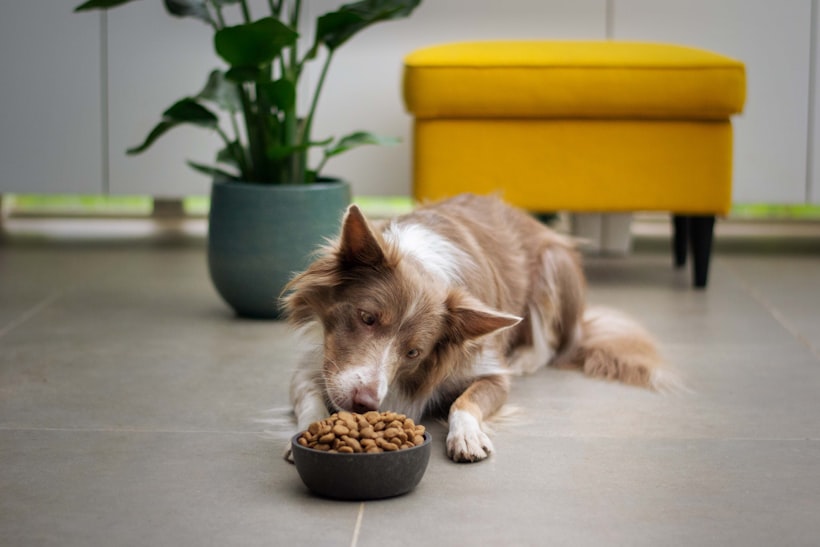
Getting senior dog portion sizes right is one of the most impactful
things an owner can do — too little leads to muscle loss, too much leads
to obesity that stresses aging joints. (Photo: Unsplash)
Quick Answer: Most senior dogs need
20–30% fewer calories than they did as active adults —
but the exact amount depends on your dog's weight, breed, activity level,
and health conditions. VCA Animal Hospitals recommends using the feeding
chart on your food packaging as a starting point only, then adjusting
based on your dog's body condition and your vet's guidance. The most
reliable approach:
weigh your dog monthly, assess body condition every 2 weeks, and ask
your vet for a specific calorie target.
You've been feeding your dog the same amount for years. But now that
they're older, slower, and perhaps a little thicker around the middle — or
thinner than they used to be — you're not sure if what's in the bowl is
still right. And the bag's feeding chart doesn't seem to account for any
of that.
Senior dogs have genuinely different nutritional needs from adult dogs.
Their metabolism changes, their muscle mass shifts, and many develop
health conditions that affect what and how much they should eat. Getting
portions right matters — too little can accelerate muscle loss, too much
can cause weight gain that stresses already-vulnerable joints.
This guide explains how to figure out the right amount to feed your senior
dog, how to adjust it over time, and when to bring your vet into the
conversation.
How a Senior Dog's Nutritional Needs Change
Senior dogs aren't simply older adults — their bodies work differently in
ways that directly affect how much and what they should eat. According to
VCA Animal Hospitals, understanding these changes is the foundation of
good senior nutrition:
Metabolism Slows Down
As dogs age, their metabolic rate typically decreases. PetMD notes that
senior dogs tend to need fewer calories than they did as younger adults
because their bodies are less muscular overall, and muscle requires more
energy to maintain than fat. A dog that needed 1,200 calories at age 4 may
only need 900–1,000 calories at age 10 — even if their activity level
seems similar.
Muscle Mass Decreases
This creates a nutritional paradox: senior dogs often need
fewer calories overall but more protein per calorie to
maintain muscle mass. According to the AKC, older dogs may need about 50%
more protein to maintain muscle mass compared to younger dogs. VCA notes
that avoiding muscle loss is one of the primary goals of senior nutrition
— which is why many senior diets have higher protein percentages despite
lower overall calorie counts.
Digestive Efficiency Changes
PetMD notes that aging affects digestion — older dogs may absorb nutrients
less efficiently than they once did, meaning the same food that sustained
them at age 5 may not provide the same nutritional benefit at age 12. This
is one reason why senior-specific foods may produce better results than
continuing an adult maintenance diet indefinitely.
Health Conditions Affect Needs
Many senior dogs develop conditions — kidney disease, diabetes, heart
disease, arthritis, dental problems — that require specific dietary
adjustments. VCA notes that these conditions may require prescription
diets that differ significantly from standard senior formulas. This is why
your vet's input becomes increasingly important as your dog ages.
📝 Scenarios shared in this article represent common situations reported
by pet owners and are used for illustrative purposes.
💬 Common Owner Experience
A pattern VCA Animal Hospitals vets frequently describe: an owner
continues feeding their senior dog the same portions as always, assuming
the dog's lighter activity level will naturally balance things out. Over
18 months, the dog gains noticeable weight — increased stress on arthritic
joints makes them less active, which causes more weight gain, which
stresses the joints further. A vet-guided feeding adjustment, switching to
a calorie-appropriate senior diet at measured portions, breaks the cycle.
VCA notes that this pattern of gradual weight gain from unadjusted
portions is one of the most common and preventable problems in senior dog
nutrition.
How Much to Feed: A Practical Starting Point
There is no single answer that works for every dog — caloric needs vary
enormously based on size, breed, activity level, and health status. What
VCA, AKC, and PetMD all agree on:
the feeding chart on your food packaging is a starting point, not a
prescription.
⚠️ VCA Animal Hospitals cautions: Don't rely on the
feeding chart on the product label for more than a couple of weeks, since
it can overestimate how much should be fed. Use it as a starting point and
adjust based on your dog's body condition and your vet's guidance.
General Calorie Ranges by Size
The table below provides approximate daily calorie ranges for senior dogs
at typical activity levels. These are estimates only — your dog's specific
needs may be higher or lower. Always confirm with your vet.
| Dog Size |
Weight Range |
Approx. Daily Calories (Senior) |
Notes |
| Toy/Small |
Under 20 lbs |
200–400 kcal/day |
Small breeds often live longer; may need senior food later (age 10–11)
|
| Medium |
20–50 lbs |
400–900 kcal/day |
Senior from approx. age 7–9 depending on breed |
| Large |
50–90 lbs |
900–1,400 kcal/day |
Large breeds age faster; senior from approx. age 6–8 |
| Giant |
Over 90 lbs |
1,400–1,800+ kcal/day |
Giant breeds considered senior from age 5–6; monitor closely |
💡 How to convert to cups: Check your dog food bag for
the kcal/cup figure (usually on the back or side panel). Divide your dog's
daily calorie target by the kcal/cup number to get the total cups per day.
Example: 900 kcal target ÷ 350 kcal/cup = approximately 2.5 cups per day.
Why the Bag's Chart May Not Be Right for Your Dog
The AKC notes that package feeding guidelines may result in larger than
necessary portion sizes — because they're designed to be conservative, and
feeding chart amounts are typically calculated for average dogs at average
activity levels. Senior dogs are often less active than average, which
means the chart may suggest more food than your dog actually needs.
Using Body Condition to Fine-Tune Portions
Body condition scoring (BCS) is the most practical tool for determining
whether your dog is getting the right amount of food. VCA Animal Hospitals
describes it as an assessment you can do at home with your hands — no
scale needed.
Too Thin
Ribs visible without touching. Spine and hip bones prominent. Obvious
waist and belly tuck from the side. May need more food or a
higher-calorie diet.
✅ Ideal
Ribs felt easily with light pressure — not visible. Waist visible from
above. Slight belly tuck from side. Portions are likely correct.
Too Heavy
Ribs hard to feel through fat covering. No visible waist. Rounded
belly. May need fewer calories or a weight-management diet.
💡 VCA recommends: Assess your dog's body condition every
two weeks. Weight changes in senior dogs can happen gradually enough that
you don't notice them day-to-day — but become significant over months.
Regular monitoring lets you catch and adjust before the change becomes a
health problem.
How Many Meals a Day for a Senior Dog?
VCA Animal Hospitals recommends dividing a senior dog's daily food
allowance into two to four smaller meals rather than one
or two large ones. This is particularly important for senior dogs for
several reasons:
-
✅Easier on the digestive system. Smaller, more frequent
meals reduce the strain on aging digestive systems and may reduce the
risk of bloat — a serious and potentially life-threatening condition
that is more common in large, deep-chested breeds.
-
✅Better appetite monitoring. VCA notes that portion
feeding — rather than free-feeding — makes it immediately visible if
your dog skips a meal or eats less than usual, which can be an early
sign of illness. A dog with food available all day can skip meals
without anyone noticing for days.
-
✅Better blood sugar regulation. For dogs with diabetes
or at risk of blood sugar issues, more frequent smaller meals help
maintain more stable glucose levels throughout the day.
-
✅More manageable for dogs with dental pain. Dogs with
dental disease may struggle to eat a full meal at once. Two or three
smaller meals may be more comfortable than one larger one.
💬 Common Owner Experience
A pattern vets at VCA describe regularly: an owner switches from
free-feeding to two measured meals per day when their senior dog turns 10.
Within a week, they notice their dog is leaving some food in the bowl at
dinner — something they hadn't seen before. A vet visit reveals early
dental disease that had been quietly reducing the dog's appetite. Because
the owner could now clearly see exactly how much was being eaten, they
caught the problem early. VCA notes that moving from free-feeding to
portion meals is one of the most valuable changes owners can make as dogs
enter their senior years.
When to Adjust Portions — and How
Senior dog nutrition isn't set-and-forget. PetMD recommends monitoring and
adjusting your dog's food portions as their needs change over time. Here
are the key signals that an adjustment may be needed:
| What You're Seeing |
What It Likely Means |
Suggested Action |
| Dog is gaining weight, ribs getting harder to feel |
Too many calories |
Reduce portion by 10%; recheck in 2–3 weeks |
| Dog is losing weight, ribs becoming more visible |
Too few calories or underlying health issue |
Increase portion AND consult vet — weight loss in seniors needs
investigation
|
| Dog is leaving food in the bowl consistently |
Reduced appetite — may be dental pain, illness, or food preference
|
Vet appointment to rule out medical cause |
| Dog seems hungry all the time despite normal portions |
May be diabetes, Cushing's disease, or simply underfed |
Vet visit for blood work before increasing food |
| Dog was diagnosed with kidney, heart, or liver disease |
Standard senior food may not be appropriate |
Ask vet about prescription diet formulated for their condition |
⚠️ Important: Never make large sudden changes to your
dog's diet. PetMD recommends transitioning to any new food gradually over
7–10 days — mixing increasing amounts of the new food with the old — to
avoid digestive upset. Sudden dietary changes can cause vomiting,
diarrhea, and food aversion.
Treats and Table Scraps: What Counts
This is an area many owners overlook when calculating their dog's daily
intake — but VCA Animal Hospitals is clear: treats count as calories, and
they add up quickly.
-
✅Keep treats under 10% of daily calories. VCA
recommends that treats, snacks, and any people food should make up no
more than 10% of a senior dog's total daily calorie intake. For a dog
eating 800 calories a day, that's a maximum of 80 calories in treats —
roughly 3–4 small commercial treats.
-
✅Choose low-calorie treat options. VCA suggests fresh
or frozen vegetables — green beans, carrots, cucumbers, broccoli — as
excellent low-calorie treats. Small servings of apples, bananas, or
berries also work well. Avoid grapes, raisins, onions, and anything with
xylitol, which are toxic to dogs.
-
✅Avoid table scraps. VCA notes that table scraps are
not nutritionally balanced and often contain high levels of fat and
sodium that can upset a senior dog's digestive system or contribute to
pancreatitis.
-
✅Tell your vet about treats. Many owners forget to
mention treats when discussing their dog's diet with the vet — but this
information significantly affects calorie calculations and weight
management advice.
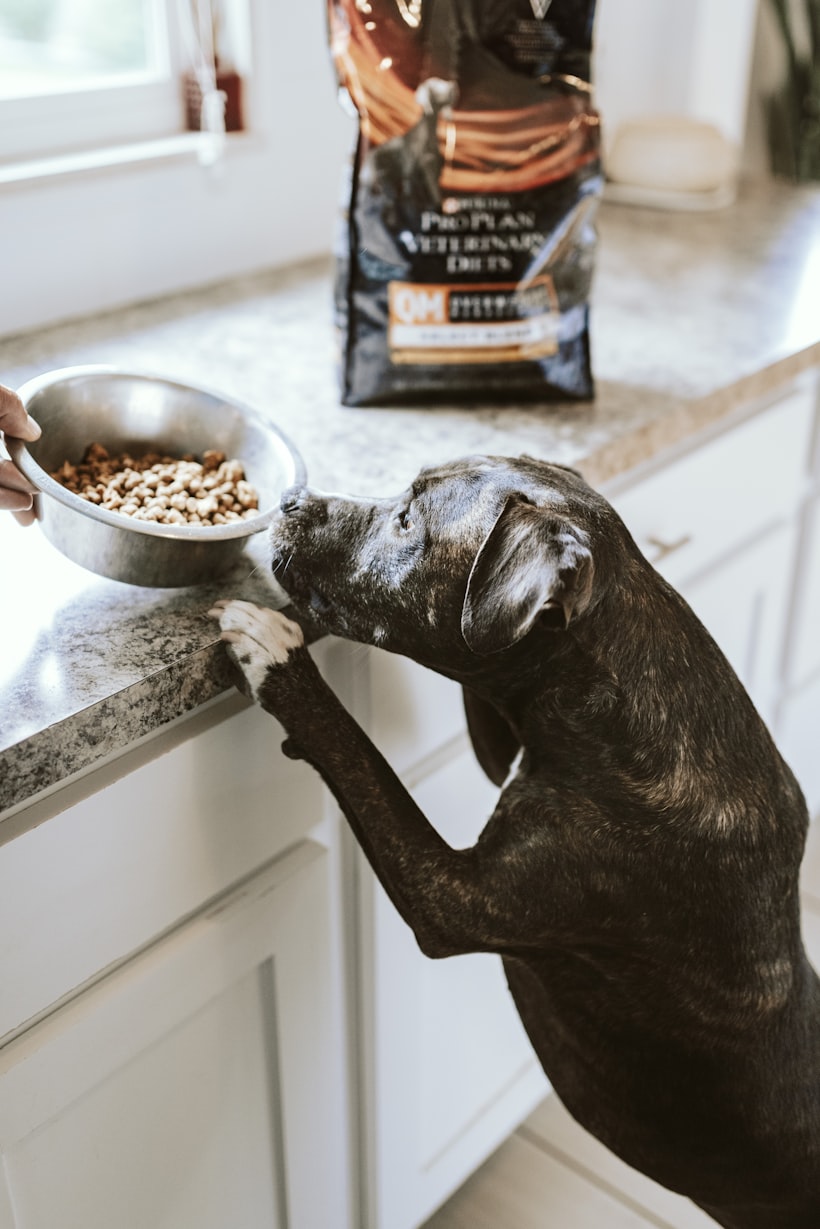
Measuring your senior dog's food and transitioning away from
free-feeding are two of the most practical changes owners can make for
their dog's long-term health. (Photo: Unsplash)
Frequently Asked Questions
Q: Should I switch my dog to senior food, and when?
The AKC recommends discussing the timing with your vet, as it varies by
breed and size. Large and giant breeds are generally considered senior
from around age 5–7; small breeds from around age 10–11. VCA notes that
not all dogs need a senior-specific food — some may do better staying on
a high-quality adult maintenance food, while others benefit from the
adjusted nutrient profiles of senior formulas. Your vet can assess your
dog's individual needs and body condition to make the right
recommendation.
Q: My senior dog seems hungry all the time — should I feed them more?
Not necessarily, and not without talking to your vet first. PetMD notes
that increased appetite in senior dogs can sometimes indicate underlying
medical conditions including diabetes, Cushing's disease, or certain
medications rather than simple hunger. Before increasing food intake, a
vet visit and blood work can rule out medical causes. If your dog is
genuinely underfed based on their body condition score, your vet can
help you calculate the right adjustment.
Q: How do I know if my senior dog's food has enough protein?
The AKC suggests looking for a protein percentage of 28–32% on a
dry-matter basis for healthy older dogs. Look for named protein sources
(chicken, beef, salmon) listed as the first ingredient. VCA recommends
avoiding foods marketed as "all life stages" for senior dogs, as these
are formulated to meet the higher requirements of growing puppies and
may provide excessive nutrients in some areas while being inadequate in
others for an older dog.
Q: Can I feed my senior dog once a day?
Technically possible, but VCA Animal Hospitals recommends against it for
senior dogs. Two to four smaller meals per day is preferable — better
for digestion, better for blood sugar stability, and better for
monitoring appetite changes that might signal health problems. If twice
daily is the most practical for your schedule, that's acceptable; once
daily is generally not the best option for senior dogs.
Q: My senior dog has kidney disease — how does this affect feeding?
Significantly. VCA notes that kidney disease typically requires a
phosphorus-restricted, protein-modified diet — usually a prescription
kidney diet formulated specifically for this condition. Standard senior
dog food, even high-quality options, is generally not appropriate for
dogs with diagnosed kidney disease. This is one of the clearest examples
of why working with your vet on a feeding plan becomes essential as dogs
develop chronic conditions in their senior years.
📚 Sources & References
-
VCA Animal Hospitals —
Feeding Mature and Senior Dogs
— Sarah K. Abood, DVM, PhD; Krista Williams, BSc, DVM; Robin Downing,
DVM, CVPP, CCRP, DAAPM
-
VCA Animal Hospitals —
Nutrition: General Feeding Guidelines for Dogs
— Caitlin Grant, DVM, DVSc; Ryan Llera, BSc, DVM; Cheryl Yuill, DVM,
MSc, CVH
-
American Kennel Club —
Best Dog Food for Senior Dogs: What to Know When Choosing a Food
-
American Kennel Club —
How Much Should I Feed My Dog?
-
PetMD —
5 Tips for Feeding a Senior Dog
-
PetMD —
Dog Feeding Chart: How Much Food Should I Feed My Dog?
The Bottom Line
There's no single answer to how much you should feed your senior dog —
because no two senior dogs are alike. What matters is that you're paying
attention: checking their body condition regularly, adjusting portions
when you see changes, and keeping your vet in the conversation as their
needs evolve.
The bag's feeding chart is a starting point, not a destination. Your dog's
body condition score is the most reliable guide you have. And twice-yearly
vet visits — with weight checks and body condition assessments — are one
of the most valuable investments you can make in your older dog's quality
of life.
Getting their food right is one of the clearest ways you can take care of
them. And at this stage of their life, that care matters more than ever.
Medical Disclaimer: This article is written for
informational and educational purposes only and does not constitute
veterinary medical advice, diagnosis, or treatment. Feeding
recommendations vary significantly based on individual health conditions.
Always consult a licensed veterinarian before making changes to your
senior dog's diet.


Comments
Post a Comment