Is Your Senior Dog Pacing at Night? Read This Before You Worry
🐾 Senior Dog Behavior
June 2026
·
10 min read
Is Your Senior Dog Pacing at Night? Read This Before You Worry
✅
Information in this article references guidance from:
American Kennel Club (AKC.org), PetMD.com, and VCA Animal Hospitals.
Always consult a licensed veterinarian for your pet's specific health
needs.
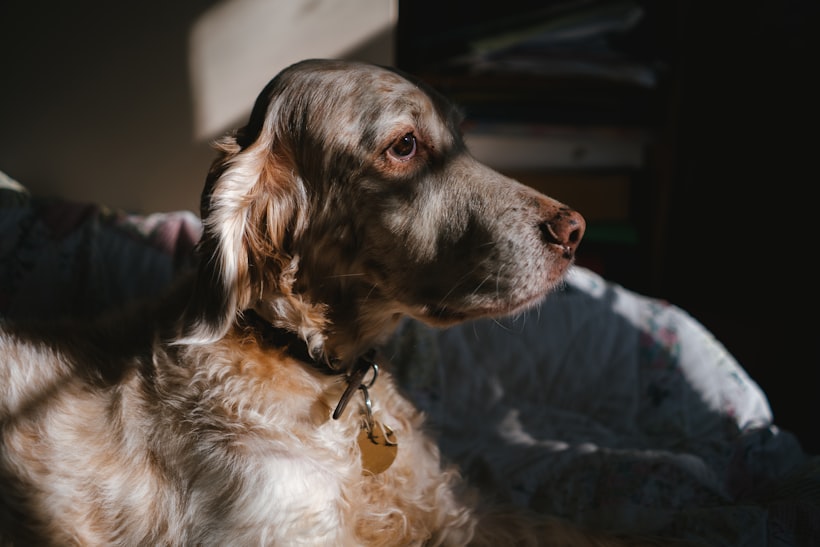
Nighttime pacing in senior dogs is rarely random — it almost always has
an identifiable cause, from cognitive dysfunction to pain to anxiety.
Finding that cause is the first step toward helping. (Photo: Unsplash)
Quick Answer: Senior dogs pace at night most commonly
because of Canine Cognitive Dysfunction (CCD) — the dog
equivalent of dementia — which disrupts the sleep-wake cycle and causes
nighttime restlessness. Other common causes include
chronic pain (especially arthritis),
anxiety, vision or hearing loss, and
underlying medical conditions like hypothyroidism or
kidney disease. Nighttime pacing in a senior dog is not normal and always
warrants a veterinary evaluation — there are effective management options
for most causes.
You've started dreading nighttime. Your senior dog — who used to sleep
soundly — now wanders the house in the dark, clicking across the floor,
unable to settle. You get up to check on them, they look at you with a
vaguely confused expression, and then resume their circuit of the bedroom.
And you lie awake wondering what's happening.
Senior dog nighttime pacing is one of the most common — and most
distressing — behavioral changes owners experience. It's exhausting for
the whole household, and it's easy to assume it's simply "old age." But
pacing at night in a senior dog is almost never random. It's a signal, and
understanding what it means is the first step toward actually helping.
6 Causes of Nighttime Pacing in Senior Dogs
📝 Scenarios shared in this section represent common situations reported
by pet owners and are used for illustrative purposes.
This is the most common cause of nighttime pacing in senior dogs — and,
according to VCA Animal Hospitals, one of the most underdiagnosed.
Canine Cognitive Dysfunction Syndrome (CDS) is an age-related
neurological condition that progressively affects memory, awareness, and
the sleep-wake cycle. One of its most characteristic features is a
reversal of the normal day-night pattern: dogs sleep more during the day
and become restless, confused, and active at night.
The AKC describes this nighttime restlessness as "Sundowner syndrome" —
a term borrowed from Alzheimer's disease in humans, where confusion and
agitation tend to worsen in the evening. Dogs with CDS may pace
aimlessly, vocalize, appear disoriented even in familiar rooms, or get
stuck in corners.
VCA notes that CDS affects 28% of dogs aged 11–12 and 68% of dogs aged
15–16 — making it one of the most prevalent conditions in senior dogs,
yet owners often attribute the signs to "just getting old."
💬 Common Owner Experience
A pattern VCA Animal Hospitals vets frequently describe: an owner
notices their 13-year-old dog has started sleeping heavily through the
afternoon, then waking around 10 PM to pace and vocalize until 2 AM. The
dog seems to look through them rather than at them, and occasionally
gets "stuck" in the corner of the bedroom. The vet diagnoses Canine
Cognitive Dysfunction. A combination of selegiline medication, Purina
Pro Plan Neurocare diet, and increased daytime activity produces
noticeable improvement in nighttime restlessness within 4–6 weeks. VCA
notes that early diagnosis and intervention give dogs the best chance of
slowing the progression and maintaining quality of life.
💡 Management options for CCD-related pacing: VCA and
PetMD recommend selegiline (Anipryl) — a prescription medication
available only through a licensed veterinarian — as the only
FDA-approved treatment for CDS in dogs. Additional options include
omega-3 supplementation, brain-support diets, melatonin for sleep
regulation, and consistent daytime enrichment and exercise to promote
better nighttime sleep.
Pain is one of the most important — and most commonly overlooked —
causes of nighttime restlessness in senior dogs. When a dog is in pain,
lying still can be more uncomfortable than moving. An arthritic dog may
be able to tolerate the discomfort while distracted during the day, but
at night, with no distractions, the pain becomes harder to manage —
driving them to get up and pace.
PetMD notes that arthritis, spinal pain, dental disease, and other
chronic pain conditions can all lead to nighttime pacing in senior dogs.
The pacing may be accompanied by frequent position changes, reluctance
to lie down, whimpering, or unusual postures.
💬 Common Owner Experience
A scenario PetMD vets describe regularly: an owner assumes their pacing
senior dog has dementia. A thorough vet exam reveals significant hip
arthritis with inadequate pain management. After adjusting the pain
medication plan — adding a long-acting NSAID prescription available only
through a licensed veterinarian — the nighttime pacing stops almost
entirely within a week. PetMD emphasizes that pain should always be
ruled out before concluding that nighttime restlessness is purely
cognitive, as the two conditions can look identical from a behavioral
standpoint.
💡 Watch for: Pacing accompanied by stiffness when
getting up, reluctance to use stairs, sensitivity when touched around
the back or hips, or unusual postures (hunching, shifting weight). These
suggest pain as a contributing factor.
Senior dogs can develop new anxieties — or existing anxiety can worsen —
as they age. According to PetMD, anxiety is a common cause of nighttime
restlessness in older dogs and may develop as a result of cognitive
changes, sensory loss (which makes the world feel less predictable), or
separation anxiety that has intensified with age.
Nighttime in particular can trigger anxiety in dogs with cognitive
decline or sensory loss — the reduction in visual and auditory cues that
usually anchor them can leave them feeling disoriented and unsafe.
💬 Common Owner Experience
A pattern described in PetMD's guide to senior dog behavior changes: an
owner notices their senior dog pacing and whining in the evening, often
following the owner from room to room and seeming unable to settle even
when the owner is present. A vet evaluation identifies anxiety
exacerbated by early cognitive decline. A combination of trazodone (a
prescription medication available only through a licensed veterinarian),
pheromone diffusers, and a consistent nighttime routine produces
meaningful improvement. PetMD notes that anxiety and cognitive
dysfunction frequently overlap in senior dogs — addressing both together
produces better results than managing either one in isolation.
Senior dogs that are losing their vision or hearing may pace at night
because the darkness removes the visual cues they rely on to navigate. A
dog with good vision during the day may become genuinely disoriented at
night as the environment becomes harder to read. PetMD notes that vision
and hearing loss in senior dogs can cause them to seem confused or
anxious, particularly in low-light conditions.
This can look identical to cognitive dysfunction from a behavioral
standpoint — the dog wanders, seems confused, and cannot settle. The key
distinction is whether the behavior is significantly worse in the dark
than during daylight hours.
💬 Common Owner Experience
A scenario commonly described by vets: an owner reports that their
senior dog paces all night but is calm and settled during the day. A vet
evaluation reveals significant vision loss and early cataracts. After
adding night lights throughout the house and keeping the dog in a
smaller, well-lit area at night, the pacing reduces dramatically. The
AKC recommends using night lights and avoiding rearranging furniture as
important accommodations for senior dogs with vision loss — changes that
often produce immediate improvement in nighttime behavior.
A range of medical conditions can cause nighttime restlessness and
pacing in senior dogs by affecting comfort, metabolism, or neurological
function. PetMD lists hypothyroidism, Cushing's disease, kidney disease,
urinary tract infections, and liver disease as conditions that can all
produce restlessness, confusion, or discomfort significant enough to
disrupt sleep.
Conditions that increase thirst or the urge to urinate — like kidney
disease, diabetes, or Cushing's disease — may cause a dog to pace
because they need to go outside but are not effectively communicating
this to their owner.
💬 Common Owner Experience
A pattern vets at VCA describe: a senior dog begins pacing at night and
waking the owners repeatedly. Initial assumption is cognitive
dysfunction. Blood work reveals Cushing's disease — a condition causing
elevated cortisol that drives increased thirst, urination, and nighttime
restlessness. After treatment with medication to regulate cortisol, the
nighttime pacing stops. VCA notes that medical causes should always be
ruled out through blood work and urinalysis before attributing nighttime
pacing to behavioral or cognitive causes alone.
Some medications commonly prescribed for senior dogs — including
steroids (corticosteroids), certain heart medications, and thyroid
medications — can cause restlessness, increased energy at night, or
difficulty sleeping as side effects. If your dog's nighttime pacing
started shortly after beginning or changing a medication, this is worth
discussing with your vet.
💡 What to do: Note exactly when the pacing started and
whether it correlates with any medication changes. Share this timeline
with your vet — it can immediately point to a cause and allow for
medication adjustment without extensive additional testing.
💬 Common Owner Experience
A scenario PetMD vets describe: a senior dog starts a course of
prednisone for an inflammatory condition and begins pacing at night
within days of starting the medication. The owner contacts their vet,
who adjusts the dosing schedule to morning-only administration. The
nighttime pacing resolves. PetMD notes that corticosteroids are a
well-recognized cause of nighttime restlessness in dogs, and that dosing
timing can sometimes reduce this side effect without discontinuing the
medication.
Recognizing Canine Cognitive Dysfunction
Because CCD is the most common cause of nighttime pacing in senior dogs —
and because it's so frequently missed — it's worth understanding its full
symptom profile. VCA Animal Hospitals uses the acronym
DISHAA to describe the signs:
| Letter |
Sign |
What It Looks Like |
| D |
Disorientation |
Getting lost in familiar areas, going to wrong side of door, not
recognizing family members
|
| I |
Interactions |
Reduced interest in play, becoming clingy or reclusive, irritability
when approached
|
| S |
Sleep-wake cycle changes |
Sleeping more during the day,
pacing and restlessness at night
|
| H |
House soiling |
Accidents indoors, going outside then immediately having an accident
inside
|
| A |
Activity changes |
Repetitive behaviors like pacing or circling; wandering; reduced
responsiveness
|
| A |
Anxiety |
New fears, increased vocalization, clinginess, general restlessness
|
⚠️ Important: The signs of CCD can look identical to the
signs of many other treatable conditions. VCA emphasizes that a veterinary
workup — including blood work, urinalysis, and physical exam — should
always be done before concluding that nighttime pacing is caused by
cognitive dysfunction. Many dogs with apparent "dementia signs" actually
have a treatable medical condition.
When to Call the Vet
Any new onset of nighttime pacing in a senior dog warrants a veterinary
appointment. This is not something to watch for weeks hoping it resolves —
because most causes of nighttime pacing are progressive, and early
intervention produces better outcomes.
🚨 Seek Same-Day or Emergency Care If Pacing Is Accompanied By:
- Rapid or labored breathing
- Collapse or inability to stand
- Pale, gray, blue, or purple gums
- Extreme distress — crying out, shaking, unable to be calmed
- Sudden onset rather than gradual development
- Repeated attempts to urinate with little or no output
- Bloated or tense abdomen
For pacing that has been developing gradually without emergency signs,
schedule a vet appointment within the next few days. Come prepared with:
-
✅A video of the nighttime pacing if possible. VCA
recommends this for any behavioral concern — vets are unlikely to see
the behavior in the clinic, and a video provides invaluable context.
-
✅A timeline of
when the pacing started, whether it's getting worse, and what time of
night it occurs.
-
✅A complete list of current medications and supplements
— including anything started recently.
-
✅Notes on other behavioral changes — house soiling,
confusion, changes in appetite, daytime sleep patterns, or social
interaction.
What You Can Do at Home Tonight
While you arrange a vet appointment, there are practical steps that may
reduce nighttime pacing — particularly if cognitive dysfunction or sensory
loss is a factor:
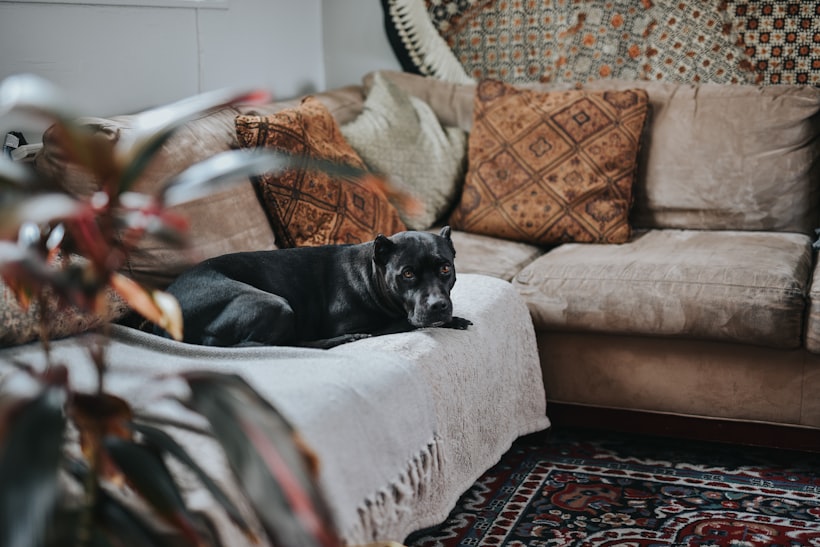
A consistent routine, a well-lit sleeping area, and daytime enrichment
can meaningfully reduce nighttime pacing while you work with your vet to
address the underlying cause. (Photo: Unsplash)
-
✅Add night lights. PetMD and the AKC both recommend
night lights for senior dogs with vision loss or cognitive dysfunction.
The reduction in visual disorientation at night can produce immediate
improvement in pacing behavior.
-
✅Increase daytime activity. VCA notes that more
physical and mental activity during the day — gentle walks, puzzle
feeders, brief training sessions — helps promote better sleep at night
by expending energy and supporting the natural sleep-wake cycle.
-
✅Keep a consistent routine. PetMD emphasizes that
consistent feeding times, walk times, and bedtime are particularly
important for dogs with cognitive dysfunction. Predictability reduces
anxiety and helps anchor the internal clock.
-
✅Create a small, safe sleeping area. PetMD recommends
keeping a dog with CCD in a smaller room at night to reduce the
disorientation of wandering large, dark spaces. A baby gate can close
off a comfortable bedroom or hallway.
-
✅Consider an orthopedic bed in a warm location. If pain
is contributing, a memory foam or orthopedic bed significantly reduces
joint discomfort during rest. Placing it in a consistently warm spot
reduces morning stiffness.
-
✅Don't punish nighttime pacing. PetMD is explicit:
punishment doesn't help and can worsen anxiety in an already-confused
senior dog. The pacing is not misbehavior — it's a symptom. Respond with
calm reassurance rather than frustration.
Frequently Asked Questions
Q: Is nighttime pacing always a sign of dementia in senior dogs?
Not always — though CCD is the most common cause. Pain, anxiety, vision
loss, medication side effects, and medical conditions like Cushing's
disease or kidney disease can all produce identical-looking nighttime
pacing. PetMD emphasizes that a vet evaluation with blood work is
essential before attributing pacing to cognitive dysfunction, as many
other causes are highly treatable.
Q: Can I give my senior dog melatonin to help with nighttime pacing?
Melatonin is sometimes recommended by vets to help regulate the
sleep-wake cycle in dogs with cognitive dysfunction. PetMD mentions it
as one of several options vets may suggest. However, always check with
your vet before giving any supplement — the appropriate dose depends on
your dog's weight and health status, and some formulations contain
xylitol, which is toxic to dogs. Never give human melatonin products
without specific veterinary guidance.
Q: My senior dog only paces at night, not during the day — what does
that mean?
Pacing that is specifically or predominantly nocturnal points strongly
toward either CCD (which classically disrupts the sleep-wake cycle),
vision loss (which worsens in low light), or pain that's harder to
manage at rest without daytime distractions. The AKC notes that the
day-night reversal of activity is one of the most distinctive signs of
cognitive dysfunction in dogs. This pattern is worth discussing in
detail with your vet.
Q: Is there a cure for nighttime pacing caused by CCD?
There is no cure for CCD itself — it is a progressive condition.
However, VCA notes that management is effective at slowing progression
and improving quality of life for many dogs. Selegiline is an
FDA-approved medication that can meaningfully reduce cognitive
dysfunction signs in eligible dogs. Combined with brain-support diets,
environmental enrichment, and consistent routines, many dogs with CCD
experience significant improvement in nighttime behavior. Discuss
management options with your vet early rather than waiting for the
condition to advance.
Q: How do I know if my dog is pacing because of pain vs. dementia?
This is genuinely difficult to determine without a veterinary exam,
because the two can look identical. PetMD recommends that your vet
assess for both conditions simultaneously. Some clues that suggest pain:
the dog responds with more obvious stiffness or reluctance to lie down;
they settle when given pain medication; they favor specific positions;
they are sensitive to touch on specific areas. Clues that suggest CCD:
the dog seems confused or disoriented regardless of position; pacing is
aimless rather than position-seeking; there's a clear day-night reversal
of activity. In many senior dogs, both conditions are present
simultaneously.
The Bottom Line
Watching your senior dog pace through the night — unable to settle, unable
to rest — is one of the harder things about caring for an aging dog. It's
exhausting for you, and it's distressing to see them like this. But it's
important to know: this is almost never simply "old age." There is almost
always a cause, and in many cases, an effective management approach.
The first step is a vet appointment — with a video if possible, and a
clear account of when the pacing started and what other changes you've
noticed. From there, your vet can help you identify whether this is
cognitive dysfunction, pain, anxiety, a medical condition, or some
combination, and put together a plan.
Your dog has spent years navigating your routines, your moods, your life.
They deserve the same attentiveness from you now, when their world feels a
little harder to navigate. Start with that vet call.
Medical Disclaimer: This article is written for
informational and educational purposes only and does not constitute
veterinary medical advice, diagnosis, or treatment. Always consult a
licensed veterinarian before making decisions about your senior dog's
health, medications, or behavioral management.


Comments
Post a Comment